The Wheatsheaf: Restoration and Conservation
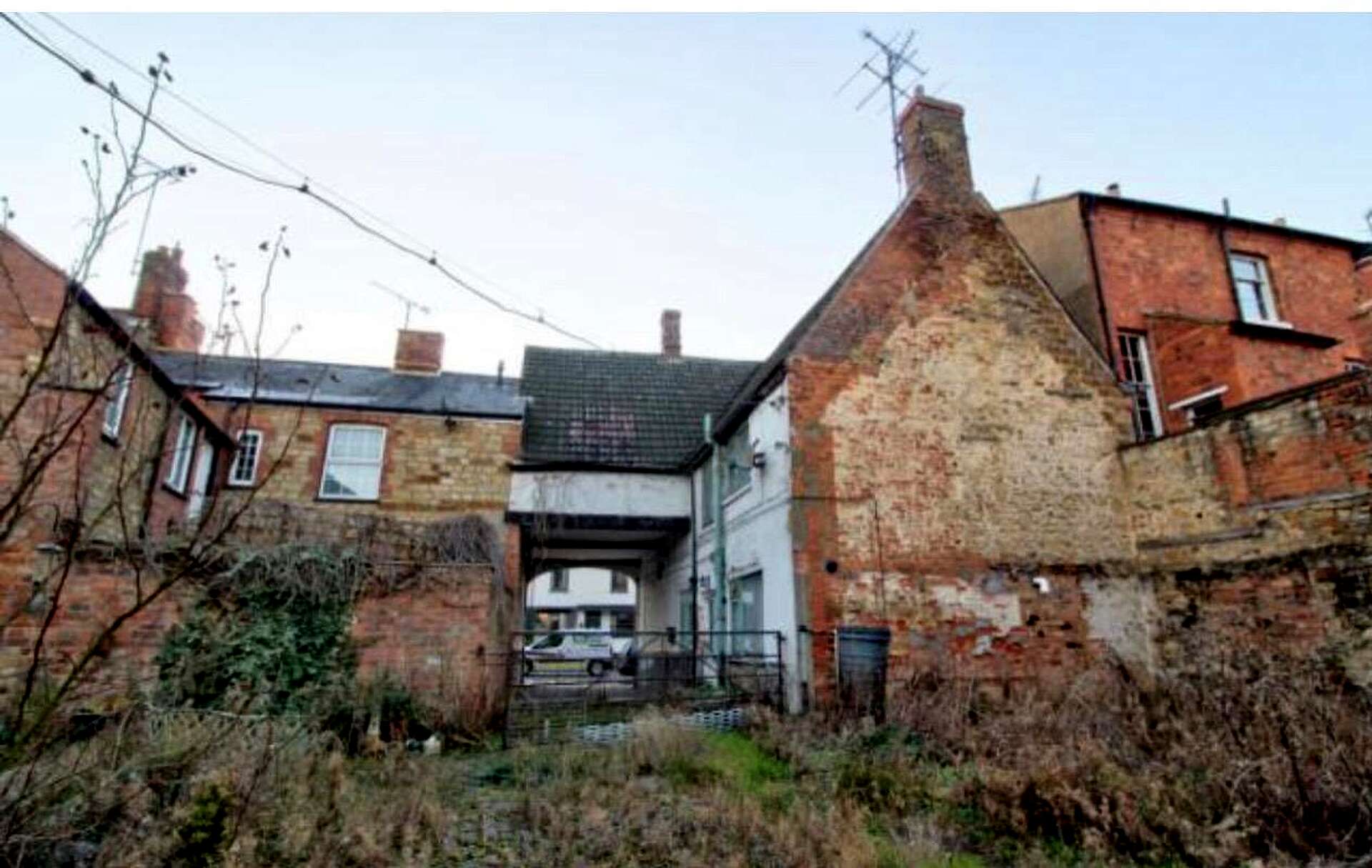
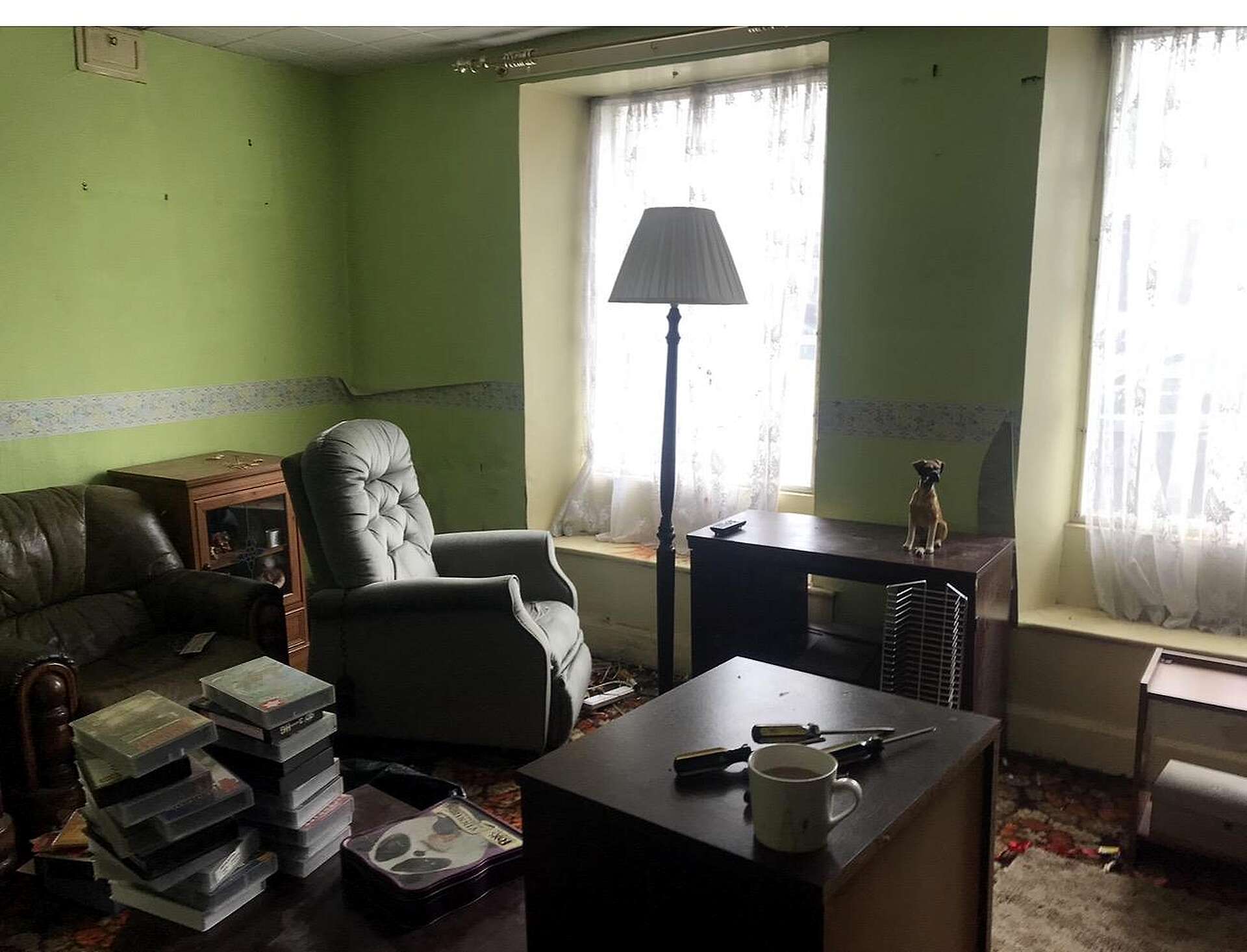
Andrew and Gail purchased the Wheatsheaf in July 2019. At the time of purchase, the property was in a severely derelict condition. The principal structural wall supporting the roof was failing, the building suffered from extensive damp, windows were rotten and leaking, and the grounds and courtyard were heavily overgrown with collapsed boundary fencing. Photographs taken at the time of purchase document the extent of deterioration.
Undertaking the renovation and restoration of the Wheatsheaf was a monumental task. Fortunately, we engaged an experienced local builder with the specialist skills required to restore a historic coaching inn to its former glory.
Initial Clearance and Strip-Back
The first phase involved the removal of more than sixty years’ worth of accumulated debris left by the previous owner, including thirteen televisions and five vacuum cleaners. All inappropriate modern materials were carefully removed, including cement-based plasters, concrete floors, bitumen, polystyrene ceiling tiles and wallpaper, MDF flooring, and other non-breathable materials. The building was stripped back entirely to its original fabric to allow for a proper conservation-led restoration.
Structural Works and Flooring
The rebuilding phase began with excavating the ground floors. A deep layer of glasscrete was laid to provide insulation while preventing rising damp. This was topped with a permeable membrane to allow the structure to breathe, followed by a breathable limecrete screed.
A solid York stone floor, at least three inches thick, was laid over the limecrete floor and underfloor heating system. Due to the extreme weight of the stone flags, they were installed using a mechanical lifting system attached to the overhead beams.
Roof Restoration
The roof required urgent attention due to leaks and the absence of effective guttering. Inappropriate 1960s green concrete tiles and spray foam insulation were removed, and the roof was stripped back to its original elm trusses and joists. Historic photographs from the late 19th century were used to source appropriate clay peg tiles, closely matching the original roof covering. Traditional metal guttering was installed to replicate the historic appearance.
Masonry and External Walls
Many bricks within the supporting external walls were found to be rotten and were replaced with genuine Georgian bricks. The existing lime mortar had deteriorated significantly and was carefully renewed using traditional tuck pointing to match the original finish. Rotten oak lintels were replaced with new green oak lintels to maintain structural integrity.
The building façade was in very poor condition. All inappropriate cement mortar was removed, and the entire façade was repointed in lime mortar. Each stone was hand-cleaned with wire brushes to reveal and enhance the natural red tones of the Northamptonshire stone. During this work, the main arch was discovered to be dangerously close to collapse and was therefore dismantled and rebuilt, incorporating substantial oak lintels to support the roof above.
Windows and Openings
Historic photographs were again used to guide the replacement of 1960s single-pane windows with traditional six-over-six sash windows. These were handmade in hardwood by our builder and fitted with sash cords and lead weights to replicate the originals. Heritage glass was used to provide the subtle imperfections characteristic of handmade antique glass.
A previously bricked-up north-facing window overlooking the A5 was also rediscovered. This opening was reinstated using antique elm and heritage stained glass to ensure authenticity. The window infill was crafted from antique elm. In the 1960s, Mr Fox, a former owner, nicknamed this opening the “Dick Turpin Window,” claiming—somewhat theatrically—that he once escaped through it onto the A5 while being pursued by the law.
Breathability, Plastering, and Insulation
Ensuring the building could breathe was central to the restoration, reducing the risk of damp and timber decay. Lime plaster was used throughout the property and finished with breathable casein distemper paint. Insulation was provided using sheep’s wool between walls and floors.
In areas where original lath and plaster survived, these were repaired using riven chestnut laths and five coats of lime plaster. This method creates a subtly uneven surface, allowing light to play across the walls and enhancing the building’s historic character. All woodwork was finished with heritage linseed oil paint to allow the timber to breathe.
Fireplaces and Internal Architectural Features
Over the years, several original fireplaces had been lost. Considerable effort was therefore devoted to sourcing appropriate antique fireplaces and fire grates dating from the period 1760–1780, ensuring stylistic and historical accuracy.
The hob grate in Ann Rollings’ Room is a particularly fine example. Its sculptural detailing and figural form are reminiscent of motifs seen in the work of Thomas Gainsborough, and it serves as one of the most striking surviving interior features within the house.
Floors and Staircases
Upstairs, a significant proportion of the original 18th-century elm floorboards survived. Areas where elm had been lost to woodworm and rot—often replaced in the mid-20th century with MDF and pine—were removed and replaced with antique elm sourced nationwide from private sellers and specialist suppliers.
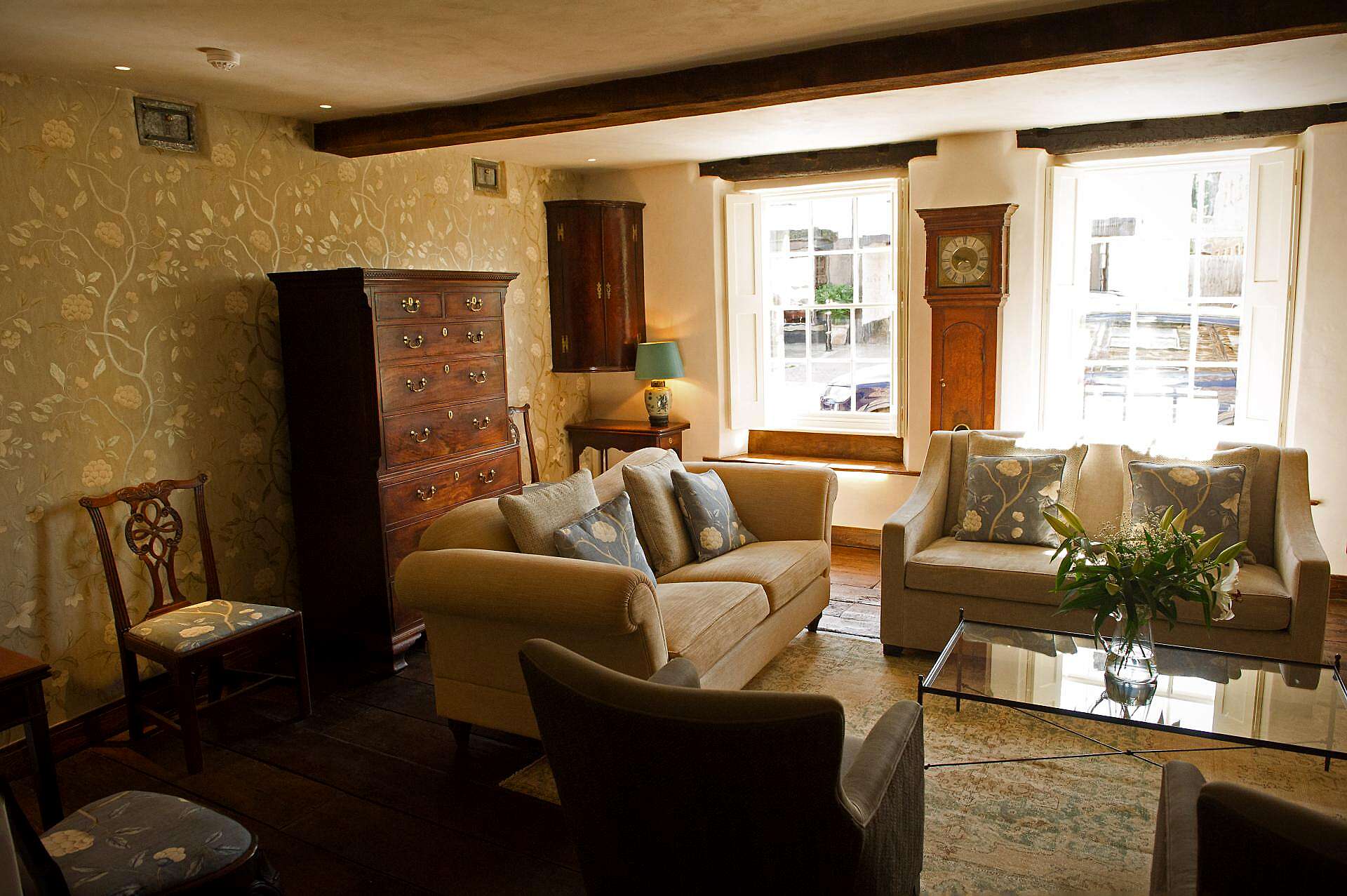
The ground-floor living room and the twin bedroom on the second floor feature thick oak boards salvaged from the Wren Wing following the fire at Easton Neston House in 2005. These boards took three years to clean and wax before they were suitable for installation. The oak was originally felled in Silverstone Wood in 1703 and seasoned at Easton Neston House, likely under the direction of renowned architects Nicholas Hawksmoor and Sir Christopher Wren.
The property now contains two new staircases constructed from antique elm to achieve an aged, heritage appearance. The original main staircase was uncovered beneath a thick 1960s shag-pile carpet and six layers of historic paint. Damaged treads were repaired using antique elm, and the staircase was carefully polished using Fiddes furniture wax. Paint removal was undertaken using specialist poultices to preserve the underlying timber.
Lighting and Interior Design
Lighting throughout the property has been carefully designed using correct frequencies and warm tones to evoke the ambience of candlelight. Layered lighting of varying depths highlights original features, including the carved figures on the hob grate in Ann Rollings’ Room.
Significant time was devoted to sourcing genuine antique Georgian furniture to complement the historic fabric of the building. Wall finishes were selected with equal care. The wallpaper in the ground-floor lounge is Snowtree by Colefax & Fowler, a design originally created in the 18th century. The same pattern has been used for the ground-floor blinds in a complementary colourway.
Additional wallpapers from Cole & Son were selected to introduce drama and a strong period character. In Hannah Caves’ Room, a bold black-and-orange scheme was chosen to complement the dark wooden floors and the antique staircase, creating a richly atmospheric interior.
Original Victorian and Edwardian oil paintings have been carefully selected and displayed throughout the property to reinforce period authenticity and enhance the historic narrative of the Wheatsheaf.
Doors, Ironmongery, and Bedrooms
Authentic Georgian door furniture was sourced and fitted to the front door. All bedrooms are named after former landlords and landladies of the Wheatsheaf. One such room, Harold’s Room, is named after Harold, the nephew of Mr and Mrs Furness, who stayed in the room above the arch while recuperating from meningitis contracted during World War II. Sadly, he died there.
Courtyard and Signage
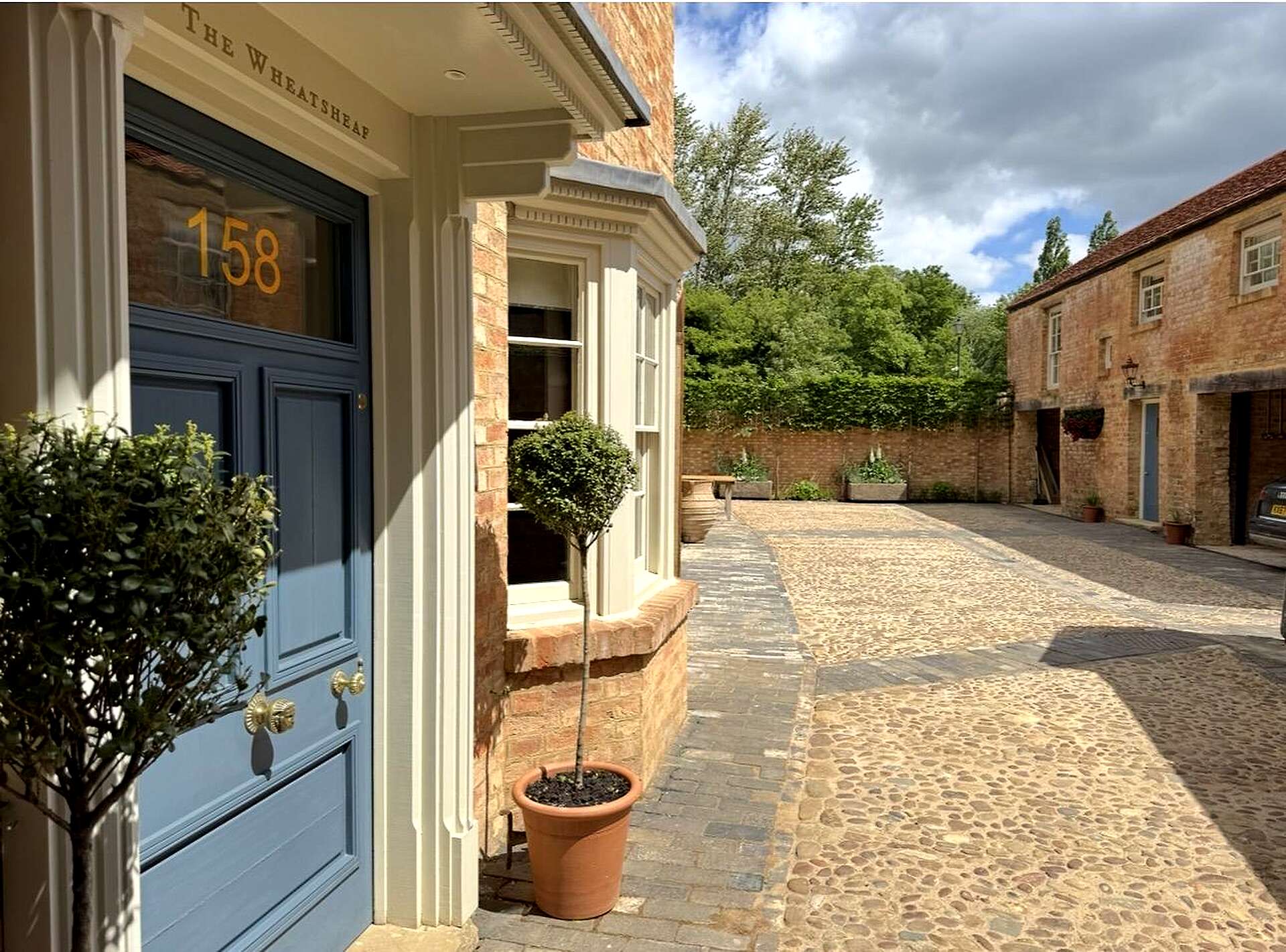
An early 20th-century photograph showing the original courtyard layout—featuring cobbles and blue engineering bricks—was used to accurately recreate the historic pattern. The courtyard has now been restored to its former appearance.
A local signwriter was commissioned to repaint signage beneath the arch, replicating exactly how the inn façade was painted in the early 1900s. An original photograph of the Wheatsheaf sign was also used to reproduce and replace the hanging sign, which now sits on the original bracket. Gold leaf has been applied to the wheatsheaf motif, allowing it to shimmer in sunlight.
Conclusion
The journey to restore the Wheatsheaf has been immense. Throughout the process, we have gained invaluable knowledge and experience—enough, we feel, to write a book. Every challenge was embraced, and every detail carefully considered. We are immensely proud to have secured the Wheatsheaf’s future and preserved its heritage for generations to come.